

Understanding Negative Feedback Loops: Crucial Examples in the Human Body
Within the intricate machinery of the human body, a remarkable system of checks and balances constantly works to maintain stability. This system is known as negative feedback. It’s a fundamental biological process where the body senses a change from its internal equilibrium, or homeostasis, and then initiates corrective actions to reverse that change and bring things back to the set point. Think of it as the body’s built-in thermostat or governor, ensuring conditions like temperature, pH levels, and blood sugar remain within optimal ranges for survival and proper function.
The concept of negative feedback loops is central to understanding how organisms, particularly multicellular ones like humans, adapt and survive in fluctuating environments. Unlike positive feedback loops, which amplify changes (like the cascade of events during childbirth), negative feedback aims to dampen deviations and restore stability. This article delves into the definition of negative feedback, explores its mechanisms, and highlights several crucial examples directly from the human body, illustrating its indispensable role in maintaining health.
Defining the Negative Feedback Loop
To appreciate the examples, it’s essential to understand the components and steps involved in a typical negative feedback loop:
- Stimulus: A change in the internal or external environment that deviates from the normal set point. For instance, an increase in body temperature.
- Sensor (Receptor): An organ or cell that detects the stimulus. Thermoreceptors in the skin and hypothalamus detect temperature changes.
- Control Center (Integrator): Usually a part of the nervous system or an endocrine gland, like the hypothalamus or pancreas, which processes the sensory information and determines the appropriate response.
- Effectors: Organs or muscles that carry out the response. Examples include sweat glands, blood vessels, muscles, or glands like the pancreas.
- Response: The action taken by the effectors to counteract the stimulus and bring the system back to its set point.
Key to this process is the feedback signal. In negative feedback, this signal informs the control center of the deviation, leading to actions that reduce the effect of the stimulus. For example, if the body gets too hot, the control center (hypothalamus) triggers effectors (sweat glands) to cool the body down. The reduction in temperature then sends a feedback signal to cease the sweating, thus halting the corrective action once equilibrium is restored.
Example 1: Regulation of Body Temperature
One of the most intuitive examples of negative feedback is the regulation of body temperature. Humans are warm-blooded (endotherms), maintaining a relatively constant internal temperature, typically around 37°C (98.6°F), regardless of external conditions. This process involves several effectors:
- Sweat Glands: Produce sweat, which evaporates and cools the skin.
- Arrector Pili Muscles: Cause hairs to stand on end (goosebumps), trapping a layer of insulating air close to the skin.
- Smooth Muscle in Blood Vessels: Causes vasoconstriction (narrowing) to reduce blood flow to the skin and conserve heat, or vasodilation (widening) to increase heat loss.
- Metabolic Rate: Increased by shivering (skeletal muscle contraction) or hormonal changes (thyroid hormones, epinephrine) to generate heat.
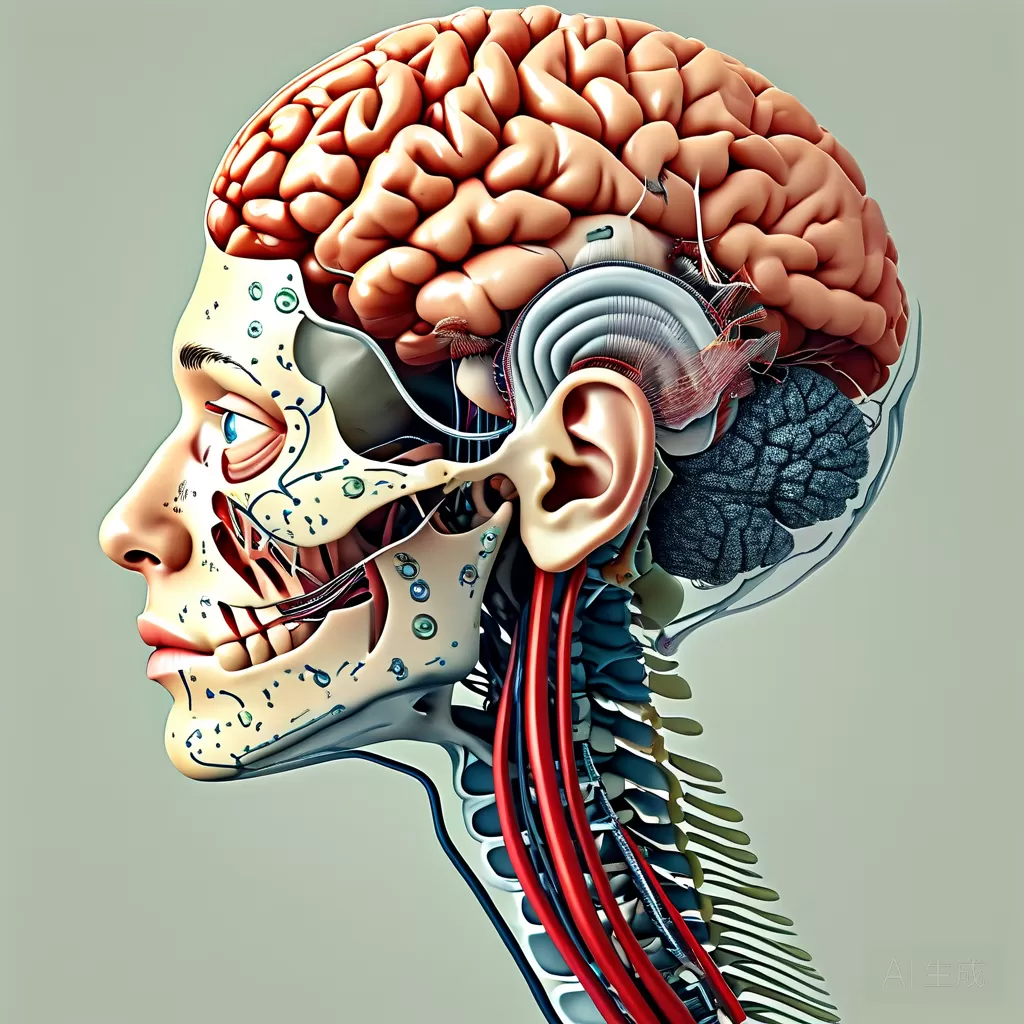
The hypothalamus acts as the control center, housing numerous temperature-sensitive neurons. If the body temperature rises above the set point (stimulus), the hypothalamus activates heat-loss mechanisms (like sweating and vasodilation) and inhibits heat-production mechanisms (like shivering). Conversely, if temperature drops too low, the hypothalamus triggers heat-conservation and heat-production mechanisms. This continuous monitoring and adjustment ensure that the internal temperature remains stable, allowing metabolic processes to function optimally. [IMAGE_PLACEHOLDER: Diagram of human body showing heat sensors, hypothalamus, sweat glands, blood vessels, illustrating temperature regulation]
Example 2: Control of Blood Glucose Levels
Another vital example is the regulation of blood glucose (sugar) levels. Maintaining consistent blood glucose is crucial for providing energy to cells. This is primarily managed by two key hormones produced by the pancreas: insulin and glucagon. **Unlock the Secrets: A Practical Example of a Negative Feedback Loop**
When blood glucose levels rise after a meal (stimulus), beta cells in the pancreas release insulin. Insulin acts as an anabolic hormone, promoting the uptake of glucose by cells (especially muscle and fat cells), stimulating glycogen synthesis in the liver and muscle, and inhibiting glucose production by the liver. This lowers blood glucose levels back towards the normal set point.
Conversely, when blood glucose levels fall (for example, between meals or during fasting), alpha cells in the pancreas release glucagon. Glucagon stimulates the liver and other tissues to break down stored glycogen (glycogenolysis) and release glucose into the bloodstream, and it promotes gluconeogenesis (the production of new glucose from non-carbohydrate sources). This raises blood glucose levels back to the set point. Understanding Negative Feedback Loops with Real-World Examples
The release of insulin and glucagon is a classic negative feedback mechanism. High blood glucose triggers insulin release, which lowers glucose; low glucose triggers glucagon release, which raises glucose. This tight regulation prevents hyperglycemia (high blood sugar) and hypoglycemia (low blood sugar), both of which can be detrimental. [IMAGE_PLACEHOLDER: Diagram illustrating pancreas cells (alpha and beta), liver cells, and blood glucose levels showing the negative feedback loop between insulin and glucagon]
Example 3: Regulation of Blood Pressure
Our circulatory system relies on negative feedback to maintain stable blood pressure. Blood pressure is the force exerted by circulating blood against the walls of the arteries. It fluctuates slightly with each heartbeat (systolic and diastolic pressures), but long-term stability is crucial.
 Become a Catalyst: Exploring Positive Feedback Loop Examples
The renin-angiotensin-aldosterone system (RAAS) is a key hormonal negative feedback loop for blood pressure regulation. If blood pressure drops (stimulus), specialized cells in the kidneys release renin. Renin initiates a cascade leading to the production of angiotensin II, a potent vasoconstrictor that narrows blood vessels, thereby increasing blood pressure. Angiotensin II also stimulates the release of aldosterone, a hormone that promotes sodium and water retention by the kidneys, further increasing blood volume and pressure.
Conversely, if blood pressure becomes too high, mechanisms like the RAS shutdown and the release of other hormones (e.g., atrial natriuretic peptide – ANP) counteract these effects. ANP promotes sodium and water excretion, reducing blood volume, while other factors may cause vasodilation (relaxation of blood vessel walls). Baroreceptors in the carotid arteries and aorta continuously monitor pressure and signal the brainstem, which can adjust heart rate and the force of heart contraction via the autonomic nervous system – another aspect of negative feedback ensuring blood pressure stays within a healthy range. [IMAGE_PLACEHOLDER: Illustration showing kidneys, blood vessels, heart, and hormones involved in blood pressure regulation (RAAS, ANP)]
Example 4: Acid-Base Balance and pH Regulation
The pH level of blood and other body fluids must be tightly controlled for enzymatic function and overall cellular health. Blood pH is maintained within a narrow range, approximately 7.35 to 7.45 (slightly basic).
Several systems work together for acid-base balance, including chemical buffers (like the carbonic acid-bicarbonate buffer system), respiratory mechanisms (via the lungs), and renal mechanisms (via the kidneys). The lungs play a rapid role: if blood pH drops (becomes too acidic, stimulus), the brainstem detects this and increases the rate and depth of breathing (hyperventilation). This blows off more carbon dioxide (CO2), which forms carbonic acid, thus reducing acidity and raising pH (feedback). Conversely, if pH rises (too alkaline), breathing slows down (hypoventilation), retaining CO2 and lowering pH.
The kidneys provide a slower but crucial long-term regulation. They can excrete hydrogen ions (H+) and retain bicarbonate ions (HCO3–) to correct imbalances caused by metabolic processes or dietary intake. This is another negative feedback loop, ensuring the internal pH remains stable despite various internal and external